
Matching Your Water Feature to Your Home’s Architectural Style
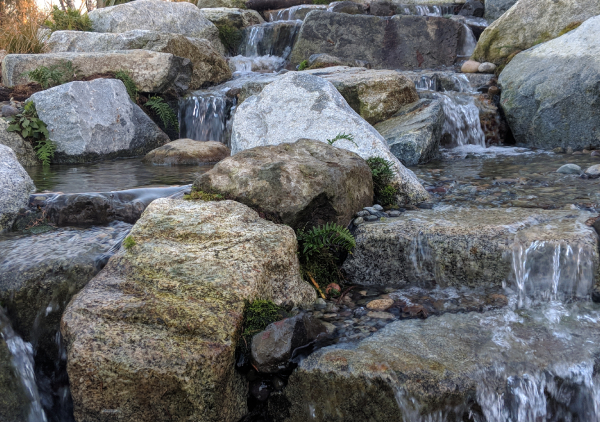
A water feature doesn’t just add movement or sound to an outdoor space; it makes a design statement. When the feature aligns with your home’s architectural character, it feels inevitable, like it was always meant to be there. When it doesn’t, even the most beautiful pond or waterfall can feel like it belongs to a different property entirely. At Fontana Ponds & Water Features, matching your water feature to your home’s architectural style is one of the most meaningful decisions we guide homeowners through, because getting it right transforms a yard into a cohesive, living retreat.
The Principle Behind Architectural Harmony
Visual cohesion is the goal. A water feature is a focal point, and focal points are scrutinized. Materials, scale, and formality all communicate something about a space, and when they speak the same language as your home, the result reads as intentional design rather than decoration added as an afterthought.
Harmony doesn’t mean matching identically; it means choosing elements that share a design logic with your home’s existing materials and proportions. A craftsman bungalow and a contemporary glass-and-steel home can both carry a water feature beautifully, but they’re calling for very different ones.
Learn more about integrating a water feature into an existing landscape.
Reading Your Home’s Architectural Cues
Before settling on a style, look at two things: your home’s materials and its lines.
- Ask yourself whether the exterior feels structured and symmetrical, or organic and layered.
- Consider whether the dominant materials are stone, wood, stucco, brick, or concrete.
- Notice whether the landscaping leans formal, with manicured edges, or casual, with native plants and naturalistic flow.
Those answers tell you whether your home is asking for a formal feature or a naturalistic one, and that single distinction guides almost every decision that follows.
Formal Homes: Structure and Symmetry
Homes with classical symmetry, columns, or formal facades, including traditional, colonial, and Mediterranean styles, have an architectural vocabulary built around order and proportion. Water features for these homes should reinforce that sensibility.
Well-suited options include tiered fountains positioned on a central axis, geometric reflecting pools with clean defined edges, and structured waterfalls with even controlled flow. Smooth concrete or cut stone basins suit these properties particularly well.
Placement matters as much as style here. A formal home with a feature positioned off-centre or tucked into an irregular corner introduces visual tension that undercuts the home’s natural symmetry.
Natural and Informal Homes: Organic and Integrated
Most homes in the Fraser Valley and Lower Mainland fall into this category, including West Coast contemporary, craftsman, rancher, and mountain modern styles. These homes emphasise natural materials, horizontal lines, and a sense of connection to the surrounding landscape.
For these properties ideal choices include ecosystem ponds with irregular organic shapes, pondless waterfalls that disappear into natural rock, and streams that meander through planted garden beds. Features built with local stone, boulders, and aquatic planting settle into the landscape in a way that feels genuinely unhurried.
Our Aquascape-certified approach centres on this aesthetic. Natural rock, living plant communities, and self-sustaining ecosystems create water features that look, over time, as though the land simply arranged itself that way.
Material Choices as Design Signals
Materials are the most immediate signal of architectural alignment. A mismatch in material reads instantly, even to eyes that can’t name why something feels off.
- Natural stone or wood siding pairs beautifully with fieldstone, boulders, and organic pond edges.
- Brick or heritage detailing calls for mortared stone, formal basins, or tiered fountains.
- Stucco or smooth plaster works well with rendered concrete basins or geometric water walls.
- Board and batten or cedar suits pondless waterfalls and naturalistic streams in a way that feels effortless rather than designed.
Scale and Placement
A water feature should feel proportionate to both the home and the yard. A grand feature on a small lot competes with the house. A modest fountain tucked into the corner of an expansive property simply disappears.
Larger, more symmetrical properties benefit from features that anchor a visual axis. Compact yards suit pondless waterfalls or small ecosystem ponds that create intimacy without overwhelming the space. Long, horizontal rooflines invite low-profile features that echo those same lines rather than interrupt them.
When in doubt, consider how the feature will read from your most-used interior windows. That sightline often reveals the ideal scale and placement more clearly than any plan drawn on paper.
Bringing It Together
Matching your water feature to your home’s architecture is less about following rules and more about listening to what your home is already saying. The lines, materials, and formality of your exterior are a design brief waiting to be answered. When the water feature responds to that brief with intention, the result is a space that feels genuinely complete, as though nothing is missing and nothing is out of place.
If you’re ready to explore what that looks like for your specific property, we’d love to talk through it with you. Reach out to our team at 778-990-9773, and let’s design something that feels like it’s always been part of your home.


Your Oasis...
Our Passion
Mission, BC V2V 7G9
(C) 2026 Fontana Ponds & Water Features | Privacy Policy