
What Causes Pond Water to Smell and How to Fix It
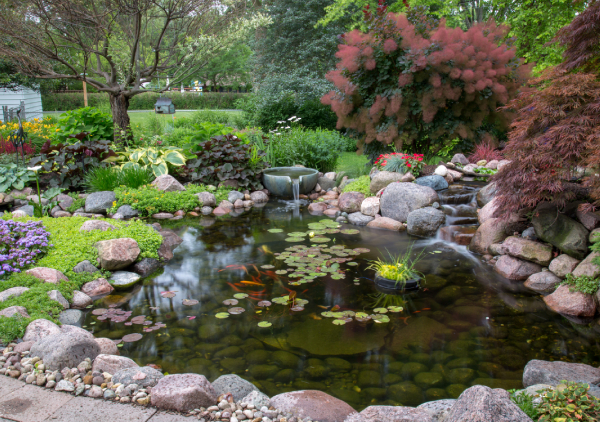
There’s nothing quite like stepping into your backyard and catching the cool, earthy scent of a healthy water garden. But when that familiar freshness gives way to something sulphurous or stagnant, the retreat you’ve built starts feeling more like a burden. At Fontana Ponds & Water Features, we know that pond water smell is one of the most common concerns among pond owners, and more importantly, it’s almost always a signal your ecosystem is out of balance rather than a sign something is permanently wrong.
Why Pond Water Smells: It Starts With Oxygen
The culprit behind most pond odours is anaerobic decomposition. When organic matter breaks down without adequate dissolved oxygen, anaerobic bacteria take over and produces hydrogen sulfide, the unmistakable rotten-egg smell, along with ammonia. Stagnant water accelerates this process by cutting off the oxygen supply that aerobic, beneficial bacteria need to do their work.
The organic matter fuelling the problem typically comes from a handful of familiar sources: accumulated fish waste and uneaten food sinking to the bottom, dead or dying aquatic plants and seasonal debris, algae die-off after a bloom, and runoff carrying organic material into the pond. Fraser Valley gardens see plenty of that last one through the wetter seasons.
A noticeable smell isn’t purely an aesthetic issue. It tells you the biological filtration system is under stress, and if fish are present, they’re likely experiencing that stress too.
Learn all about the role of beneficial bacteria in a healthy pond.
Common Causes Worth Investigating
Before reaching for a solution, it helps to identify which factor is driving the imbalance. The most frequent causes we see include:
- Overstocked fish populations: more fish means more waste, and when the biological filter can’t process the load, ammonia and organic compounds accumulate quickly.
- Poor circulation: dead zones where water barely moves become anaerobic pockets that generate odour even when the rest of the pond looks fine.
- Undersized or clogged filtration: a filter that was adequate when the pond was new may no longer match the actual fish load or debris volume.
- Shallow water volume: less water means less dilution, faster temperature swings, and a faster tipping point toward imbalance.
How to Restore Balance
Immediate Steps
The goal is to reintroduce oxygen and reduce the organic load feeding odour-causing bacteria.
Increasing aeration is the single most effective first response. A waterfall, fountain, or dedicated aerator breaks the water’s surface and drives dissolved oxygen levels back up. From there, net out leaves, dead plant matter, and surface buildup before it settles and decomposes further. A partial water change, replacing roughly 10 to 20 percent of the pond volume, helps dilute accumulated compounds without disrupting established beneficial bacteria colonies. A complete drain does more harm than good. Finally, rinse biological filter media in pond water rather than tap water to preserve the beneficial bacteria living on it.
Long-Term Solutions
Fixing the immediate odour is only half the work. Keeping it from returning means addressing what made the ecosystem vulnerable in the first place.
Submerged oxygenators, water lilies, and marginal plants absorb excess nutrients that would otherwise feed algae and anaerobic bacteria. Beneficial bacteria supplements reinforce biological filtration, particularly after seasonal cleanouts. A well-positioned skimmer captures surface debris before it sinks. It’s also worth reassessing fish stocking levels and feeding habits, since uneaten food is one of the fastest routes to an overloaded system.
Learn some simple tips for designing a healthy fish pond habitat.
Prevention Through Ecosystem Design
The most reliable way to prevent pond odour is to design the ecosystem so balance is built in from the beginning. A well-designed pond rarely develops persistent odour problems because circulation, filtration, planting zones, and depth work together as a system.
Adequate depth supports thermal stability. Properly sized biological and mechanical filtration keeps pace with the actual demands of the pond. Dedicated planting shelves encourage natural nutrient uptake, and thoughtful circulation layouts eliminate dead zones entirely. This is where Aquascape-certified design makes a meaningful difference. The methodology is built around ecosystem balance, creating ponds that stay clear and fresh with far less intervention than conventionally built water features.
When to Bring In a Professional
Some odour problems respond quickly to the steps above. Others point to something deeper: a design flaw, an undersized system, or a level of ecosystem disruption that routine maintenance can’t reverse. Consider reaching out if you notice persistent odour returning within days of treatment, fish gasping at the surface or displaying lethargic behaviour, water turning dark or producing visible gas bubbles from the bottom, or algae blooms cycling repeatedly without resolution. These are signals the system needs a proper assessment, not just another round of maintenance.
Bring the Tranquility Back
A smelling pond is a pond asking for help, and the good news is it’s asking clearly. Restore the oxygen, reduce the organic load, and revisit the underlying design, and that serene, living water feature you envisioned comes back to life. If you’re not sure where the imbalance started or want an expert eye on your system, we’d love to talk it through with you. Reach out to Fontana Ponds & Water Features at 778-990-9773 to schedule a pond assessment and get your outdoor retreat back to the peaceful space it was designed to be.


Your Oasis...
Our Passion
Mission, BC V2V 7G9
(C) 2026 Fontana Ponds & Water Features | Privacy Policy