
Pondless Waterfall Maintenance Tips
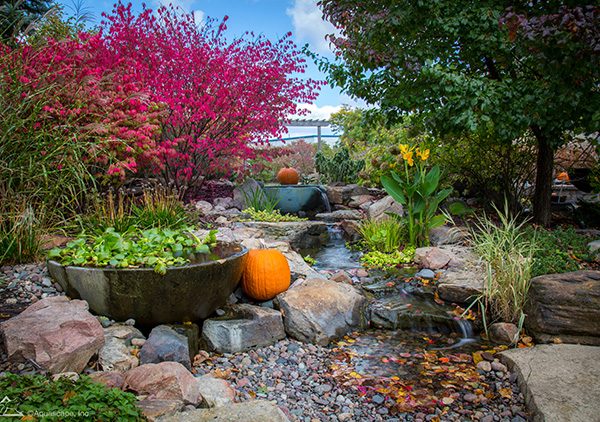
Pondless waterfalls are one of the most accessible water features you can add to a garden. No standing water, no fish to care for, and no open pond to fence or worry about. That simplicity is genuinely part of their appeal. At Fontana Ponds & Water Features, we’ve found that even the most enthusiastic pondless waterfall owners sometimes underestimate how much of their investment depends on a few consistent habits. These pondless waterfall maintenance tips cover routine care, seasonal tasks, and the design choices that affect how the feature holds up over time.
How a Pondless Waterfall Works
Understanding the system makes maintenance more intuitive. A pondless waterfall circulates water from a buried reservoir up through a pump to the top of a rock formation, where it cascades down and disappears back into the reservoir basin below. Since there is no exposed pond at the base, the system looks natural while remaining safe and relatively tidy.
The pump is the mechanical heart of the entire feature, the reservoir holds the water supply and houses it, and the rocks shape both the flow and the visual character of the waterfall. Each component plays a distinct role, and most maintenance tasks correspond directly to keeping one of those three elements in good condition.
Routine Pondless Waterfall Maintenance
Most pondless waterfall maintenance is straightforward and infrequent. A consistent routine protects the system far more effectively than reactive repairs.
Clean the Pump Regularly
The pump draws water from the reservoir basin and pushes it up to the top of the waterfall. Leaves, algae, and fine debris accumulate around and inside the pump over time, restricting flow and forcing the motor to work harder than it should. Left unaddressed, a partially clogged pump loses efficiency and eventually fails prematurely.
Cleaning the pump is a simple task. Turn off the power supply, then remove the pump from the basin. Clear away any debris by hand, or use a brush or compressed air to dislodge buildup from the intake screen and housing. Reinstall the pump and restore power. Doing this at least once a season, and more often in autumn when leaf fall is heavy, keeps the system running without strain.
Monitor the Water Level
The reservoir water level should sit just below the surface of the rocks at the base. A drop in level is worth paying attention to. Evaporation accounts for some natural loss, particularly in summer, and topping up with fresh water is a routine task. A more sudden or persistent drop, though, may indicate a slow leak in the liner or a seam that has opened up.
Running a pump with insufficient water in the reservoir will damage the motor. Checking the level each time you’re near the feature is a quick habit that prevents a costly problem.
Clean the Rocks
Algae and mineral deposits build up on rocks over time, dulling their appearance and making surfaces slippery. A pressure washer or garden hose on a high-pressure setting clears most surface growth efficiently. Regular cleaning keeps the waterfall looking natural rather than neglected, and reduces the slick coating that forms on rocks exposed to constant water flow.
Avoid using chemical cleaners directly on the rocks, particularly if plants or wildlife frequent the area. Mechanical cleaning is safer and adequate for most surface buildup.
Add Beneficial Bacteria
Even without fish, organic matter accumulates in a pondless waterfall system. Leaves, dust, and airborne debris settle into the reservoir and break down over time. Beneficial bacteria products designed for water features accelerate that decomposition, keeping the water cleaner and preventing the sludge buildup that reduces reservoir capacity and puts more strain on the pump.
Add a beneficial bacteria treatment to the reservoir periodically through spring and summer, following the dosing instructions on the product. It is one of the easiest interventions available and makes a noticeable difference in overall water clarity and system freshness.
Learn all about the different types of pond algae.
Inspect for Leaks
Small leaks can develop gradually at tubing connections, at the pump housing, or along the liner where rock weight or soil movement has shifted things slightly. They often go unnoticed until the water level drops noticeably or a wet patch appears at an unexpected location in the landscape.
Turn off the pump and inspect visible tubing, fittings, and the reservoir basin for any signs of moisture or drips. Tighten loose connections and replace damaged sections of tubing before they worsen. An annual inspection as part of spring start-up is a good habit. If the water level is dropping faster than evaporation alone would explain and no obvious leak is visible, the liner itself may need assessment.
Keep the Water Balanced
A balanced pH affects both the clarity of the water and the condition of the rocks and equipment. When pH drifts out of range, it accelerates mineral scaling on rock surfaces and tubing and creates conditions where algae blooms are more likely. Occasional testing of the reservoir water lets you catch any drift before it becomes a visible problem.
Algae blooms can still occur in a pondless system, particularly in warmer months when the reservoir sits in full sun. Treating the water with an appropriate algaecide or pH-balancing product when levels indicate a problem keeps the system in check without requiring significant intervention.
Seasonal Care and Winterizing
Greater Vancouver’s winters are mild by most Canadian standards, but sustained freezing temperatures do occur, and a pondless waterfall that is left running through a hard frost risks ice damage to the pump and tubing.
When temperatures are consistently dropping close to freezing, shut down the system, drain the reservoir completely, and remove the pump. Store the pump indoors in a dry, frost-free location. Leaving it submerged in frozen water will crack the housing. Some owners store the pump submerged in a bucket of water indoors, which keeps the seals from drying out over the winter months.
In spring, inspect the tubing and fittings before restarting. Freeze-thaw cycles can stress connections even when the pump itself was removed. Refill the reservoir, reinstall the pump, and confirm the water level is correct before switching the system on. Starting the season with a clean pump and a quick leak check means fewer surprises once the feature is running again.
Designing Your Waterfall for Beauty and Longevity
The way a waterfall is designed and planted affects how easy it is to maintain and how good it looks year after year. Thoughtful choices at the design stage reduce ongoing upkeep and make the feature more visually rewarding over time.
Rocks and Stones
Rocks are both the visual centrepiece and a functional component of a pondless waterfall. Varied sizes and shapes create more interesting water movement and a more convincing natural appearance than uniform stone. Larger boulders anchor the structure visually and direct flow, while smaller gravel and pebbles fill gaps, reduce exposed soil, and provide additional surface area for beneficial bacteria to colonize.
Rocks placed around the perimeter also help control erosion by stabilizing the soil at the waterfall’s base. This reduces the amount of silt and fine particles that wash into the reservoir basin after rain, which in turn extends the time between cleanouts.
Plants
Planting around and within a waterfall softens the edges of the rockwork and integrates the feature into the surrounding garden. Moisture-tolerant species thrive in the perpetually damp zone near the waterfall, including ferns, mosses, and creeping ground covers that knit the rocks together visually. For a more lush look, hostas, astilbes, and similar shade-tolerant perennials planted just beyond the splash zone fill out the surrounding landscape without requiring much attention.
Aquatic plants such as water lilies or lotuses can be incorporated if a basin or catch pool is included in the design. Beyond aesthetics, aquatic vegetation absorbs excess nutrients from the water, which reduces algae growth and improves water clarity. Plants also offer habitat for the beneficial insects and small wildlife that help keep an outdoor ecosystem in balance.
Lighting
Waterfall lighting extends the feature’s appeal well into the evening and transforms the garden at night. Submersible LED lights placed beneath or at the sides of the waterfall create a backlit effect that makes moving water glow. Above-water spotlights positioned to reflect off the water surface produce a different, softer mood. LEDs are the practical choice: they consume very little power, generate minimal heat, last considerably longer than halogen alternatives, and are available in a range of colour temperatures to suit the mood you want.
Fire elements such as torch stakes or fire bowls placed near the waterfall create a striking contrast between water and flame. The interplay of sound, movement, reflected light, and flickering warmth makes the outdoor space feel intentional and inviting after dark.
Sculptures and Artwork
A well-chosen sculpture can anchor a waterfall design and give the feature a personality that rocks and plants alone cannot. Pieces depicting aquatic subjects (frogs, herons, turtles) or abstract forms that echo water and movement blend naturally into the waterfall environment without looking out of place. Weather-resistant materials are essential for outdoor pieces that will be exposed to constant moisture and seasonal conditions.
Sculptures work best when their scale suits the waterfall. A large piece overwhelms a compact feature; a small one disappears. Positioned thoughtfully near the base or beside the flow, a sculpture becomes part of the composition rather than an afterthought.
Adding a Waterfall to an Existing Swim Pond
Swim ponds and waterfalls are a natural pairing. The sound of cascading water adds to the sensory experience, and the movement improves water circulation and oxygenation throughout the pond. If you already have a swim pond and are considering adding a waterfall, the integration is achievable with the right planning.
Placement matters before anything else. The waterfall should be positioned with the plant shelf in mind: spray from the waterfall can benefit moisture-loving plants nearby, but it can also force nutrients away from aquatic plants that need them. Consulting with a pond installer before breaking ground ensures the placement serves both the aesthetics and the existing ecosystem.
The waterfall ties into the swim pond’s existing pump system by patching into the pump outflow pipes, or by installing a diverter valve directly at the pump that allows the waterfall to be turned on and off independently. Once the plumbing is established, the waterfall structure itself, whether rock, stone, or masonry, can be built around the pipe routing. The exterior of any constructed basin should be fully sealed to prevent water from penetrating and causing erosion or mould behind the face of the waterfall.
Keeping Your Waterfall Running Well
A pondless waterfall rewards relatively little effort with years of reliable performance. At Fontana Ponds & Water Features, we design and install waterfalls throughout Greater Vancouver and the Fraser Valley and are happy to advise on both the technical and aesthetic side of water feature ownership. Reach us at 778-990-9773 to talk through your project.


Your Oasis...
Our Passion
Mission, BC V2V 7G9
(C) 2026 Fontana Ponds & Water Features | Privacy Policy