
How to Properly Maintain a Chlorinated Swim Pond
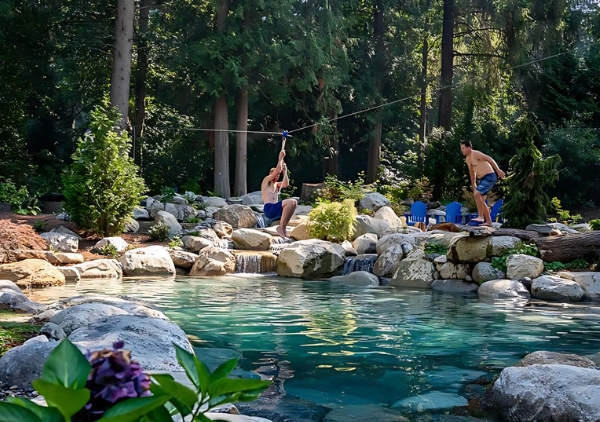
Understanding how to properly maintain a chlorinated swim pond transforms what might seem like a daunting task into a straightforward routine that protects your investment and ensures crystal-clear water throughout the swimming season. At Fontana Ponds & Water Features, we have seen how the right maintenance approach keeps these naturalistic pools functioning beautifully with far less effort than traditional swimming pools require. Salt chlorination systems generate sanitizer automatically, creating that perfect balance between clean water and the low-maintenance lifestyle our clients throughout the Lower Mainland have come to appreciate.
Learn more about the differences between chlorinated swim ponds and natural swim ponds.
Understanding Water Chemistry Fundamentals
The foundation of proper maintenance starts with balanced water chemistry. Free chlorine levels should remain between 1.0 and 3.0 parts per million to effectively sanitize your swim pond without causing skin or eye irritation. pH balance matters just as much, with an ideal range of 7.2 to 7.6, ensuring both swimmer comfort and optimal chlorine effectiveness. When pH drifts too high, chlorine loses its sanitizing power even when present in adequate amounts. Total alkalinity acts as your pH buffer, so keeping it between 80 and 120 ppm prevents the wild pH swings that can turn routine maintenance into a constant adjustment cycle.
Weekly Maintenance Rhythm
Establishing a consistent weekly routine keeps your swim pond functioning beautifully with minimal effort. Test your water chemistry two to three times weekly during active swimming months, checking both free chlorine and pH levels. Surface skimming becomes second nature when you empty your skimmer basket regularly, preventing debris accumulation that can strain your filtration system and introduce excess nutrients into the water. A quick visual inspection of your circulation jets ensures water movement remains consistent throughout the pond.
Brush the pond walls and floor weekly to prevent biofilm development on surfaces where circulation naturally slows. Unlike traditional rectangular pools, naturalistic swim ponds feature irregular shapes with varying depths, creating zones where gentle brushing disrupts potential algae attachment points before they become visible problems.
Monthly Deep Attention
Monthly maintenance involves cleaning your filter system according to manufacturer’s specifications. Sand filters benefit from backwashing when pressure gauges indicate buildup, while cartridge filters require thorough hosing to remove trapped particles. For salt chlorination systems, inspect the salt cell for scale accumulation and clean as needed to maintain efficient chlorine generation.
Check calcium hardness levels monthly, particularly if you are adding fresh water to compensate for evaporation. Proper calcium levels between 200 and 400 ppm protect your liner and equipment from both scaling and corrosive conditions that can shorten system lifespan.
Seasonal Considerations
Spring startup requires shocking the pond to eliminate any contaminants that settled during winter dormancy. Throughout summer’s heavy use, make sure to monitor chlorine consumption more closely, as higher temperatures and increased swimmer load accelerate sanitizer depletion. Fall preparation involves reducing circulation times while maintaining adequate chlorine levels to prevent algae establishment during cooling temperatures.
Your chlorinated swim pond represents a significant investment in outdoor living, and proper maintenance protects both water quality and system longevity. If you are ready to explore how a chlorinated swim pond can transform your backyard, connect with our team today. Call us at 778-990-9773 to discuss your project with our certified Aquascape contractors.


Your Oasis...
Our Passion
Mission, BC V2V 7G9
(C) 2026 Fontana Ponds & Water Features | Privacy Policy