
The Difference Between a Natural Swim Pond and a Biopool
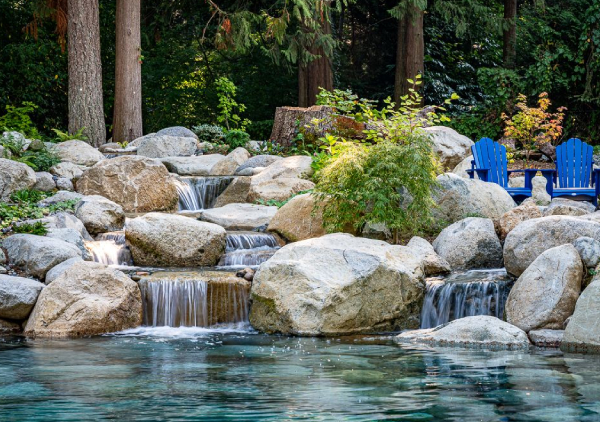
At Fontana Ponds & Water Features, we talk with a lot of homeowners who arrive at the same crossroads: they know they want a chemical-free swimming experience, something alive and beautiful, but they’re not sure whether they’re dreaming of a natural swim pond or a biopool. The difference between these two approaches is more than a matter of terminology. They represent genuinely different philosophies about how water, landscape, and living systems can come together in your backyard.
It Starts With a Design Vision
Before comparing filtration systems or square footage, the more meaningful question is aesthetic: what kind of outdoor sanctuary are you imagining?
Natural swim ponds embrace a lake-like, organic character. The regeneration zone, where aquatic plants and beneficial bacteria do the work of filtering the water, is woven into the overall design. Water lilies, rushes, and submerged oxygenators become intentional features. Frogs, dragonflies, and pollinators find habitat. The result is a living ecosystem that happens to include a pristine place to swim.
Biopools lean toward a more architectural aesthetic. The biological filtration zone is compact, often enclosed or separated from the swimming area entirely, giving the pool a cleaner, more conventional silhouette. Think of it as a contemporary backyard pool that filters itself naturally, without the visible ecology.
Learn all about the role of beneficial bacteria in a healthy pond.
How Each System Filters Water
Both approaches are genuinely chemical-free. The difference lies in how they achieve water clarity.
Natural Swim Ponds
Natural swim ponds rely on passive biological filtration. The regeneration zone uses a gravel substrate colonized by beneficial bacteria, along with carefully chosen aquatic plants, to process nutrients and maintain water quality. Water circulates gently between the swimming and regeneration zones, and the system finds its own ecological balance over time. It’s a low-intervention approach that deepens its stability with each passing season.
Biopools
Biopools use a hybrid model: biological filtration supported by mechanical components. While chemicals are still off the table, biopools incorporate pumps, skimmers, and sometimes UV clarifiers housed in separate chambers. This engineered approach accelerates filtration, which allows for a smaller biological zone and faster water turnover. The trade-off is greater dependence on equipment running consistently.
Space: How Much Room Does Each Require?
Property size often shapes the conversation in meaningful ways.
Natural swim ponds need generous square footage because the regeneration zone is substantial, often matching or exceeding the swimming area itself.
Biopools have a more compact footprint. The filtration zone is small and often external, so you can achieve a meaningful swimming area on a tighter lot.
If your property has room to breathe, a natural swim pond rewards that space with layers of beauty. If you’re working within a smaller yard, a biopool may offer more swimming surface per square foot.
Maintenance: Seasonal Rhythms vs. Equipment Routines
This distinction matters more than most homeowners expect going in.
Natural swim pond maintenance follows the garden calendar. Spring brings trimming of aquatic plants; summer calls for monitoring nutrient balance and algae. Come fall, debris management becomes the focus as leaves drop, and winter allows the ecosystem to rest quietly beneath the surface. It’s stewardship more than servicing, and for homeowners who find meaning in tending a living space, it feels like a natural extension of the landscape.
Biopool maintenance centres on equipment: monitoring pump function and water flow, cleaning skimmers and mechanical filters, and occasional servicing of UV or biofilm components. Plant care is minimal. The routine is closer to traditional pool upkeep, which suits homeowners who prefer the predictability of mechanical systems.
Learn how to properly maintain a chlorinated swim pond.
Investment and Ongoing Costs
Both are premium backyard investments. Natural swim ponds often involve lower equipment costs but require more excavation and landscaping to accommodate the larger regeneration zone. Biopools carry higher equipment costs, though a smaller footprint may reduce what you spend on excavation.
On the operational side, natural swim ponds use minimal energy since passive filtration requires little pumping. Biopools run more equipment continuously. Neither incurs ongoing chemical costs, which represents real long-term savings compared to a conventional pool.
Which One Is Right for You?
The honest answer is that it depends on how you want to live in your outdoor space.
- A natural swim pond is for those who want their backyard to feel like a discovered corner of the natural world, somewhere that changes with the seasons and rewards slow, unhurried afternoons.
- A biopool suits those who love the idea of natural filtration but prefer a more curated, architectural setting where the biology stays quietly behind the scenes.
At Fontana Ponds & Water Features, we specialize in natural swim ponds, and as one of only four Aquascape-certified companies in the region, we bring deep knowledge of ecosystem-based design to every project we take on. If you’re drawn to a living water feature that transforms with the seasons, we’d love to help you explore what’s possible on your property. Reach out to us at 778-990-9773 to start the conversation.


Your Oasis...
Our Passion
Mission, BC V2V 7G9
(C) 2026 Fontana Ponds & Water Features | Privacy Policy